The full roster
All 19 SodaFit® ingredients, one at a time
Every active named on the official product page, grouped by the job the manufacturer gives it, with a note on what each one actually is: the plant or molecule, the part used, where it comes from, and anything worth knowing before you take it. Two of them carry caffeine and one is a grapefruit derivative — both of those are flagged where they appear, not buried.
Nineteen into one dropper
One daily serving · 19 strandsHow to read this page
Each group below is a theme the manufacturer uses to describe its formula, not a pharmacological category we invented. Within a group, the entries are simply listed — not ranked, because ranking them would require the amounts, and those are not published.
Where an entry is vague on the official label — “Ginseng” with no species, for instance — we say so rather than quietly filling in the most flattering possibility.
Everything here is a structure/function description of what an ingredient is included to support. None of it is a claim about results.
Thermogenic & energy
4 of 19Botanicals the formula includes for calorie-burning and energy support. Two of them carry caffeine.
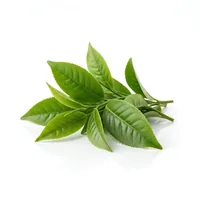
Green Tea Leaf Extract
Camellia sinensis · contains caffeine
The leaf, not the seed. Its catechins are the most-studied part of the plant; the leaf also carries caffeine, which is why this is one of two ingredients here you should count if you are watching your intake.
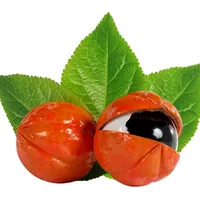
Guarana Seed Extract
Paullinia cupana · contains caffeine
An Amazonian climbing plant whose seed is, by weight, one of the most caffeine-dense botanicals used in food. Traditionally brewed in Brazil; included here on the energy side of the formula.
Cayenne Pepper
Capsicum annuum
The compound of interest is capsaicin, the same thing that makes the pepper hot. Included for thermogenic support rather than for flavour, at a level far below anything you would taste.
Raspberry Ketones
Aroma compound, synthesised or extracted
The molecule that gives red raspberries their smell. Widely used as a flavour and fragrance ingredient long before it appeared in supplements; included here on the metabolic side.
Appetite & glucose metabolism
4 of 19The part of the roster aimed at hunger signals and everyday glucose metabolism.
Gymnema Sylvestre Leaf Extract
Woody vine, southern India
Its Hindi name, gurmar, translates roughly as "sugar destroyer" — chew the leaf and sweetness briefly stops registering on the tongue. Long used in Ayurvedic practice; included here for appetite and glucose metabolism support.
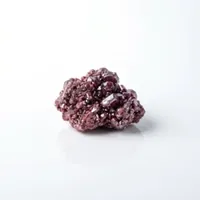
Chromium Picolinate
Essential trace mineral
A trace mineral the body needs in microgram quantities. Picolinate is the chelated form, chosen in supplements because it absorbs more readily than chromium salts. The only ingredient on this list with an established daily requirement.
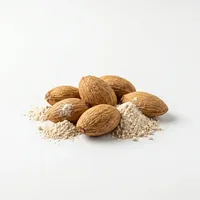
African Mango Seed Extract
Irvingia gabonensis
The seed rather than the fruit — across West and Central Africa the ground seed, dika, is a traditional food thickener. Included on the appetite side of the formula.
Grapefruit Seed Extract
Citrus paradisi
From the seed and membrane, not the juice. Worth flagging: grapefruit constituents are the classic example of a food that interferes with how the liver clears certain prescription drugs, which is one reason the medication question below is not boilerplate.
Adaptogenic roots
4 of 19Four traditional tonic roots. This is the largest single theme in the formula.
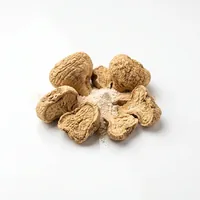
Maca Root Extract
Lepidium meyenii · Andean
A cruciferous root grown above 4,000 m in the Peruvian Andes, where it has been eaten as a food crop for centuries. Dried and powdered rather than pressed.
Eleuthero Root Extract
Eleutherococcus senticosus
Often sold as "Siberian ginseng" although it is not a true ginseng and belongs to a different genus. A shrub from north-east Asia; the root and rhizome are the parts used.
Astragalus Membranaceus Root
Huang qi
One of the most-used roots in traditional Chinese herbal practice, where sliced dried root is simmered in broths. Included here in extract form.
Ginseng
Panax species
The label says "Ginseng" without naming the species or the part used. Panax ginseng and Panax quinquefolius are different plants with different constituent profiles, so this is one of the vaguer entries on the list.
Amino acids & neurotransmitter precursors
5 of 19Five entries that are not botanicals at all. This is the least-discussed part of the formula and the most interesting.
L-Glutamine
Conditionally essential amino acid
The most abundant free amino acid in human blood. Normally supplied by diet in gram quantities; how much a dropper of a blended liquid contributes is not something the label lets you work out.
L-Arginine
Conditionally essential amino acid
A precursor in the body’s nitric-oxide pathway, which is why it turns up in both sports and circulatory formulas. Dietary sources are nuts, seeds and meat.
Beta Alanine
Non-essential amino acid
Best known from sports nutrition, where it is taken in gram doses and produces a harmless skin-tingling sensation called paraesthesia. At the doses plausible in a dropper, you would not expect to feel it.
GABA
Gamma-aminobutyric acid
The main inhibitory neurotransmitter in the central nervous system. Taken by mouth its passage into the brain is the subject of long-running scientific disagreement — a point the official page does not raise.
L-Tryptophan
Essential amino acid
The dietary precursor the body converts along the route to serotonin and then melatonin. Found in ordinary protein foods; included here alongside GABA on the calm-and-sleep side of the roster.
Antioxidant & other
2 of 19The two entries that do not sit neatly in any of the four themes above.
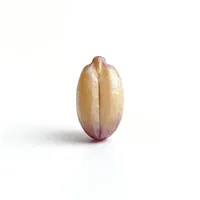
Grape Seed Extract
Vitis vinifera
A by-product of winemaking — the seeds left after pressing. Its proanthocyanidins are the reason it appears in antioxidant formulas across a dozen unrelated categories.
Forskolin
Coleus forskohlii root
From the root of a mint-family plant native to India. The isolated compound has a long history in laboratory cell work, which is a different thing from a history in human supplementation — worth keeping straight.
What the label tells you — and what it doesn’t
Both bars are the same bottleThe number that is missing
19 ingredients are named. Zero amounts are published. That is the single most important fact on this page and it is the one a sales page is least likely to volunteer.
It matters because dose is most of what determines whether an ingredient can do anything. Chromium works in micrograms; L-glutamine is normally supplied by food in grams. Both fit on the same label line. Without figures, a formula that is mostly one cheap ingredient and a whisper of the other eighteen looks identical to one that is carefully balanced.
Nothing here says that is what SodaFit is. It says the label does not let anyone rule it out — and that a site telling you otherwise has made numbers up.
Where to check us
Independent references
These are background sources on the ingredients and on how dietary supplements are regulated in the United States. None of them studied SodaFit. A study of a single ingredient, at a dose nobody has published, is not evidence about a finished multi-ingredient product — it is background.
- Office of Dietary Supplements — Chromium, health professional fact sheet
- NCCIH — Green Tea
- NCCIH — Asian Ginseng
- NCCIH — Astragalus
- NCCIH — Dietary and Herbal Supplements, general safety guidance
- FDA — Dietary Supplements: what the agency does and does not do
- FDA — Grapefruit Juice and Some Drugs Don’t Mix
- PubMed — search the primary literature for any ingredient on this page
- FTC — Health Products Compliance Guidance